

Google’s TPU 8tx and 8i Max Guide for Agentic AI
Learn how Google’s new TPU 8tx and 8i Max systems enable secure confidential inference and massive context windows for AI agents.
Google expanded its eighth-generation Tensor Processing Unit portfolio on November 9, 2026, with two new systems: TPU 8tx and TPU 8i Max. These additions bring the total to four TPU systems in one year, a first for the company.
The new systems target specific needs in the agentic era, where AI agents handle complex, multi-step tasks across large contexts while protecting sensitive data. They build on the TPU 8t and TPU 8i systems announced in April 2026.
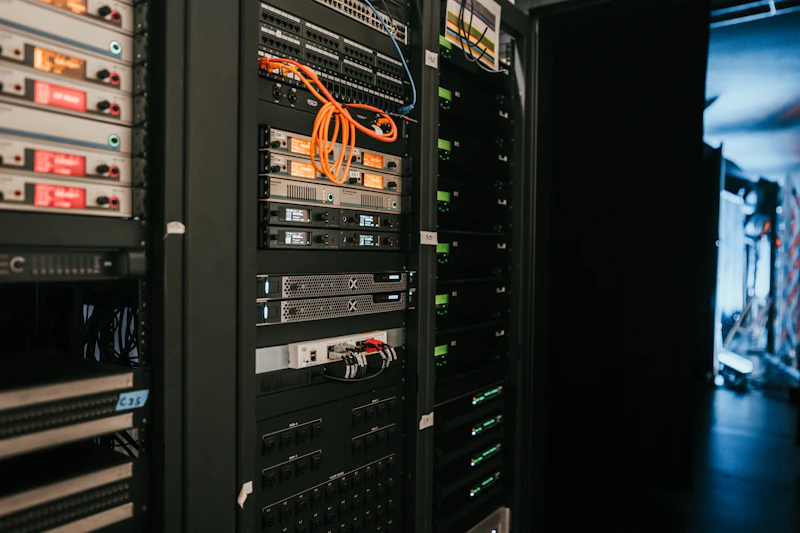
What Are TPU 8tx and TPU 8i Max?
These are system configurations rather than entirely new chips. Google designed them around existing silicon from the eighth generation to meet customer feedback on security and context length.
TPU 8tx focuses on secure and confidential inference. It pairs the TPU 8t silicon with 5th Generation AMD EPYC CPU hosts. This setup keeps sensitive data and model weights protected and isolated even while in active use through hardware-level security.
TPU 8i Max addresses the memory wall for large contexts. It combines two TPU 8i chips onto a single package. This delivers double the compute, double the SRAM, and double the HBM bandwidth of a single TPU 8i while fitting the existing rack footprint.
Together with TPU 8t for scale-up training and TPU 8i for low-latency reasoning, the portfolio covers every stage of the agentic lifecycle.
Key Capabilities of TPU 8tx
Regulated enterprises and governments can run frontier or proprietary models and autonomous agents alongside sensitive data. Data remains encrypted at the hardware layer during processing, unlike typical setups where it must be unlocked in memory.
The system adopts the low-latency Boardfly network from the reasoning-focused TPU 8i. Google states this delivers up to 2x lower latency compared to TPU 8t with a near-zero performance penalty. Teams can fine-tune models on private data, distill large models into smaller ones, and train agents through reinforcement learning on one system without migrating data between clusters.
Key Capabilities of TPU 8i Max
When dozens of AI agents work across an entire software codebase or hours of video, memory bandwidth becomes the bottleneck. The dual-chip package scales compute and memory in lockstep so processors stay equipped with essential data and large workloads do not stall.
Because it places twice the silicon in the same rack space, data centers can deploy more computing power per square foot and per watt. This supports massive context windows needed for agentic workloads.

How Developers Can Prepare
Google has not published pricing, regions, or general availability dates for the new systems. Reports indicate they may arrive in 2027. Existing TPU 8t and 8i systems remain the current options on Google Cloud.
Follow these steps to get ready:
- Review the official announcement on the Google blog for full technical details and software updates.
- Enable TorchTPU if you use PyTorch. Google open-sourced it so PyTorch code and Hugging Face models run natively on TPUs without rewrites.
- Test open-source inference engines such as vLLM and SGLang, which now include TPU backends.
- Explore the TPU agent suite in preview. It plugs into coding tools like Claude Code, Cursor, and Google Antigravity to automate onboarding and diagnose bottlenecks using plain language.
- Monitor Google Cloud for updates on Agent Compute Engine, which suspends and resumes idle agent sessions to cut costs, and TPU Sync for managing massive KV caches.
These software improvements apply across the TPU portfolio and help developers build agentic systems more efficiently. For related guidance on secure agent environments, see our post on agent compute engine secure microVMs.
Tips for Working with the New Systems
- Start with existing eighth-generation TPUs to prototype agent workflows before the new systems launch.
- Prioritize hardware-level confidential compute if your use case involves regulated data or proprietary models.
- Plan for higher density with TPU 8i Max when your agents need long context windows across codebases or video.
- Use the open software stack (TorchTPU, TPU Sync, Cloud Pathways) to avoid lock-in and simplify scaling.
- Check Google Cloud documentation regularly for availability and configuration options.
Conclusion
Google’s TPU 8tx and TPU 8i Max expand options for secure, high-context AI agent workloads. By configuring systems around proven silicon and pairing them with open software tools, Google aims to make TPUs more accessible to developers and enterprises. Track official channels for availability updates and begin testing related software features today.
Sources
- Our newest TPUs: 8tx and 8i Max, built for the agentic era — Google Blog, 9 November 2026
- Two chips for the agentic era — Google Blog, April 2026
- Google Cloud webcast and related coverage confirming system details
Share this story


