

Project Suncatcher Sends First AI Response From Orbit
Google’s Project Suncatcher satellite ran Gemma 4 on a TPU in orbit and downlinked its first haiku on 30 October 2026.
Google’s Project Suncatcher prototype satellite produced its first AI response from low Earth orbit on 30 October 2026. Engineers uplinked a prompt to the onboard Gemma 4 model running on a data-center-class TPU. The satellite downlinked a haiku while passing over Svalbard, Norway.
This is the first confirmed AI inference from a production-grade Google TPU in space. The result arrived after weeks of commissioning that began with the 1 October launch.
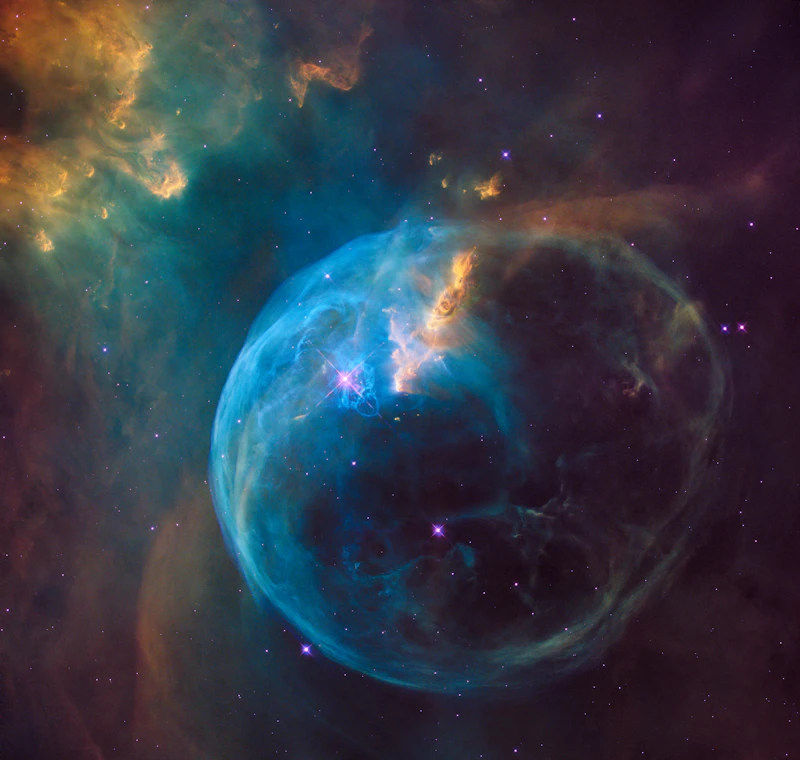
What the satellite returned
During a ground-station pass the team sent a simple request: generate a haiku about being in space. The model replied:
Blue marble below
Data streams in silent grace
Starlight feeds my core. ✨
They followed with space-themed limericks and telemetry prompts that asked the payload to report its own system status. All responses were successfully received on the ground. Travis Beals, senior director of Paradigms of Intelligence, described the moment as the project’s “Hello World” milestone.
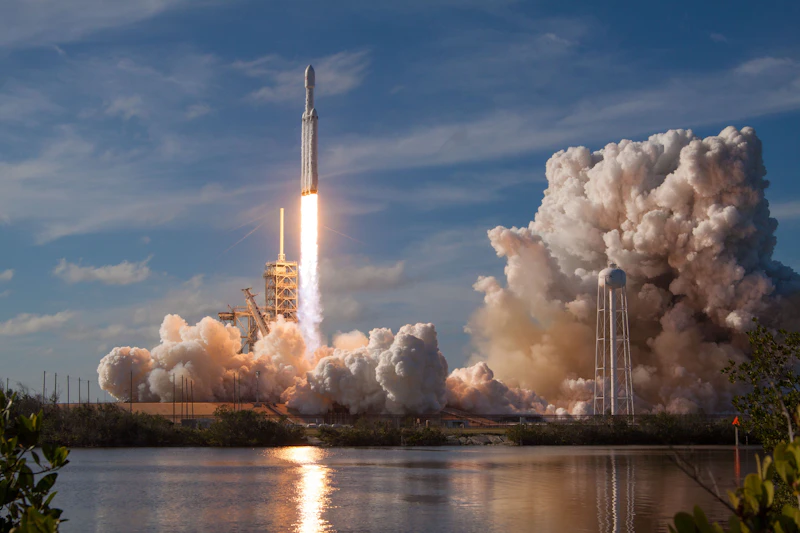
The satellite carries four Google TPUs and generates up to 1 kW from its solar arrays. It was built in partnership with Planet Labs and rode to orbit on SpaceX’s Transporter-18 rideshare mission.
How the test was structured
The sequence after launch followed a deliberate commissioning checklist:
- Establish contact and confirm basic health after separation.
- Power up the host computer and TPU trays.
- Run early machine-learning tests to verify the chips respond under orbital conditions.
- Uplink the first creative prompt and capture the downlink during a scheduled pass over Svalbard.
- Expand to limericks and status-reporting prompts.
Each step was designed to confirm that the hardware survives launch loads, radiation, and thermal cycling before larger workloads are attempted. The chips currently run in short bursts (roughly 15 minutes) so radiators can shed heat in vacuum. Continuous high-power operation is not yet possible.
Why orbit for AI compute
A solar panel in a dawn-dusk sun-synchronous orbit receives near-constant sunlight. Google’s analysis shows this can deliver up to eight times more energy over a year than the same panel on the ground. The project explores whether that advantage, combined with free-space optical links between satellites, could one day support scalable machine-learning infrastructure without the land, grid, and cooling constraints of terrestrial data centers.
Earlier coverage of the launch and the overall test plan appears in Project Suncatcher TPU Satellite Test. The October 30 result is the first public proof that inference actually ran and returned data.
What comes next
The team will continue radiation and thermal-stress testing on the current satellite. The next major milestone is a pair of interconnected satellites planned for 2027. Those craft are expected to carry higher power generation and demonstrate inter-satellite optical links—the building blocks of a larger formation-flying constellation.
Google has not published detailed performance numbers (tokens per second, error rates, or exact power draw) from the first inference. The public statement focuses on successful end-to-end communication rather than benchmark scores.
How to follow the results
- Bookmark the official Google Research blog posts for Project Suncatcher. The 30 October update and the 1 October launch note are the primary sources.
- Watch the short Google video series that explains the power, radiation, cooling, and laser-link challenges. The video embedded above covers the core concept.
- Track subsequent ground-station reports. Further telemetry and longer-duration tests will appear in later blog updates.
- Compare with the 2027 twin-satellite plan once Google publishes the next design details.
Tips for reading space-AI claims
- Treat “first response” as a communications and survival milestone, not a performance claim. No tokens-per-watt or latency figures have been released.
- Note the short duty cycle. The TPUs must shut down periodically for cooling; continuous training or large inference is still future work.
- Distinguish research moonshots from product roadmaps. Suncatcher is explicitly a long-term research effort.
- Check the partnership details. Planet Labs built the satellite bus; SpaceX provided the rideshare launch. Both are relevant when evaluating timeline risk.
Conclusion
The first AI-generated haiku from a Google TPU in orbit confirms that the Project Suncatcher prototype can power, run, and communicate with an onboard model. It is a narrow but necessary step. Radiation tolerance, thermal management, and inter-satellite links still need to be proven at larger scale before any constellation becomes practical. The 2027 twin-satellite flight is the next concrete checkpoint.
Sources
- Google receives response from Project Suncatcher prototype satellite in space (30 October 2026)
- Google’s Project Suncatcher prototype satellite is in orbit (1 October 2026)
- Behind Project Suncatcher (24 September 2026)
Share this story


