

Project Suncatcher Orbit Test: What Google Is Measuring
Google’s Project Suncatcher prototype is in orbit. See what the TPU satellite tests for radiation, heat, and launch stress, and what comes in 2027.
Google confirmed contact with its first Project Suncatcher prototype on 1 October 2026. The satellite, built with Planet, rode SpaceX’s Transporter-18 mission and is operating as expected, according to Travis Beals, senior director of Paradigms of Intelligence.
This is not a consumer product and it is not an orbital data center. It is the first in-orbit check of a research question Google has been working toward for years: can Tensor Processing Units survive spaceflight well enough to justify later tests of machine-learning hardware in low Earth orbit?
If you follow Google’s model releases, such as the Gemini 4 Argon developer guide, Suncatcher sits on a different track. Argon is software you can apply to use. Suncatcher is hardware Google is still trying to qualify.
What the mission is, and is not
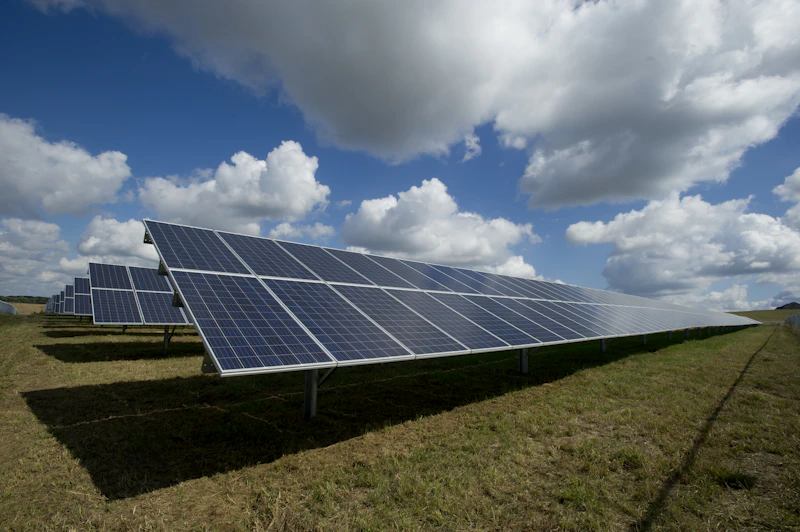
Project Suncatcher is a long-term research moonshot. Google first described it as an exploration of whether space could host scalable machine-learning infrastructure. In low Earth orbit, satellites can see near-constant sunlight and, Google says, generate up to eight times more solar power than panels on Earth.
The October flight does not try to run a public AI service from orbit. Beals wrote that the team will spend the coming weeks gathering data on how TPUs handle launch stress plus the radiation and thermal extremes of space. A peer-reviewed paper in Joule covers the research behind the mission.
Treat early posts as a test log, not a product roadmap. Google has said the next hardware milestone it is working toward is 2027.

Step 1: Separate ground tests from the flight
Google already ran much of the qualification on the ground. The orbit flight exists because some conditions cannot be copied in a lab.
Launch is short and violent. A ride to low Earth orbit lasts about 10 minutes. During that window the spacecraft sees intense vibration and sustained acceleration up to 10 times gravity. Individual parts, including the TPU chips, can see 50 to 100 g. Engineers shook the satellite on all three axes to match rocket frequencies. Google said the hardware held up, and that this kind of test often does not.
Radiation was tested at UC Davis’s Crocker Nuclear Laboratory. The team put Trillium TPUs in a proton beam while AI workloads were running and watched for errors such as bit flips. Initial results, Google wrote, showed the chips can survive a total ionizing dose greater than a five-year space mission would deliver.
Those results are encouraging and incomplete. Ground beams are controlled. Orbit adds a mix of solar events, cosmic rays, and thermal cycles the chamber cannot fully reproduce. That is the point of the prototype now in space.
Step 2: Watch the three measurements that matter
Google has named the questions this flight is meant to answer. You can track them without waiting for a product announcement.
Physical stress after launch. Contact is confirmed and the satellite is operating as expected. The useful follow-up is whether the TPUs still run workloads after the vibration and g-loads of Transporter-18, not only whether the radio works.
Radiation in real orbit. Lab protons are a proxy. In space the team wants to see how often errors appear and whether workloads keep producing usable results. A chip that survives a dose in a beam can still fail in ways a beam does not create.
Heat with no air. TPUs dump a lot of heat into a small area. On Earth, fans and airflow carry that heat away. In a vacuum, heat leaves only through radiation. Google’s approach combines heat pipes and radiators. The team already ran the design in a thermal vacuum chamber. The flight is the check on whether that cooling path works once the satellite is actually in orbit.
Step 3: Do not confuse this flight with the laser test
Later designs, Google says, would put dozens of TPU chips on each satellite and fly them in clusters. Those satellites would need to know their own position and their neighbors’ positions, then talk over lasers.
Most space laser links are built for lower bandwidth across long distances. Suncatcher needs the opposite: very high bandwidth over very short distances. Google compared the pointing problem to hitting a coin-sized target from miles away while both ends move. The company plans to test that link in 2027, with two satellites in orbit.
The October prototype does not answer the interconnect question. If a headline treats this flight as proof of an orbital AI cluster, it is ahead of the published plan.
Step 4: Read the sources in order
A clean way to follow the project:
- Start with the 1 October 2026 post from Travis Beals. It confirms launch, partner (Planet), ride (Transporter-18 with SpaceX), contact, and the scope of the coming measurements.
- Read the 24 September 2026 explainer for the ground-test numbers: 10 g on the spacecraft, 50 to 100 g on components, Crocker proton tests, Trillium dose result, heat pipes, and the 2027 two-satellite laser test.
- Open the Joule paper Google linked for the peer-reviewed write-up. Blog posts summarize; the paper is the research record.
- Use Google’s four-part video series for the engineering questions. The first film covers solar power in orbit and why the team is not stopping at ground-based solar.
What this does not change for developers
You cannot call a Suncatcher API. Training and inference still run in terrestrial data centers. Models such as Gemini 3.8 Flash and Gemini 4 Argon are unaffected by this satellite.
The practical takeaway is about infrastructure research, not a new endpoint. Google is testing whether future capacity could sit in orbit because sunlight there is more continuous. The company is also clear that the work is early, in the same category as years of experiments that preceded practical quantum systems or autonomous driving.
If you need weather or science data you can query today, that is a different Google research line. WeatherNext 3 forecasts are already exposed through Cloud, Earth Engine, and BigQuery after an access request, which we covered in how to access WeatherNext 3 forecasts.
Tips before you repeat the claims
Quote the power figure as Google states it: up to eight times more solar power in low Earth orbit than on Earth. Do not turn that into a claim that orbital chips are eight times cheaper.
Keep Trillium and the prototype separate from a future cluster. Survival in a proton beam is a ground result. Survival on this satellite is what the next few weeks are supposed to measure.
Skip any framing that the satellite is already serving Gemini, training models, or replacing a data center. Google has not said that.
Conclusion
Project Suncatcher’s first prototype is in orbit and talking to the ground. The flight is a measurement campaign: launch loads, radiation, and cooling without air. Laser links between satellites are scheduled for a later 2027 test. Until Google publishes the in-orbit results, the honest status is that the hardware left the pad and the hard data is still being collected.
Sources
- Travis Beals, “Our Project Suncatcher prototype satellite is in orbit,” Google Blog, 1 October 2026. https://blog.google/innovation-and-ai/models-and-research/google-research/project-suncatcher-prototype/
- Travis Beals, “Behind Project Suncatcher, our moonshot to put AI in space,” Google Blog, 24 September 2026. https://blog.google/innovation-and-ai/models-and-research/google-research/google-project-suncatcher-facts/
- Google, “Google’s latest moonshot to put machine learning in space,” YouTube, 24 September 2026. https://www.youtube.com/watch?v=o1JK79jszqo
- Google Blog Team, “The latest AI news we announced in September 2026,” 2 October 2026. https://blog.google/innovation-and-ai/technology/ai/google-ai-updates-september-2026/
Share this story


